Designing
Design of power supply and low-current systems in 2D and 3D environments.
Design of electrical networks.
Elektron Sistemas is a company that has confidently positioned itself in the field of electrical network design. The company implements projects throughout Latvia and beyond. A professional team of engineers is able to complete a variety of tasks and also cope with non-standard situations.
Elektron Sistemas has proven itself strongly in the implementation of 3D BIM projects, cooperating with various state institutions and participating in infrastructure construction and modernization projects of strategically important national facilities. The company works with both small companies and large customers, as well as with municipal and state projects.
We design the following sections in 2D and 3D:
- EL — Electricity supply (internal)
- ELT — Power supply (external, user part)
- ELT-ST — Power supply (external, part of the distribution network)
- ZA — Lightning protection and surge protection
- ESS — Electronic Communication Systems
- ESS-CI — Centralised notification system
- ESS-DA — Smoke protection
- ESS-CP — Access control
- ESS-AS — Security alarm
- ESS-TK — Engineering networks for electronic communications
- ESS-VAS — Control and automation systems
- ESS-VN — Video surveillance
- EST — Electronic communication systems (external)
- UATS — Fire detection and alarm systems
Frequently Asked Questions
Learn the essentials about service, process and collaboration — all the essentials in one place.
In most cases, the name of the object and its total area in square meters are sufficient to prepare a price offer.
For the part of AS Sadales mrežs (ELT-ST), technical regulations received from the Distribution Network are required.
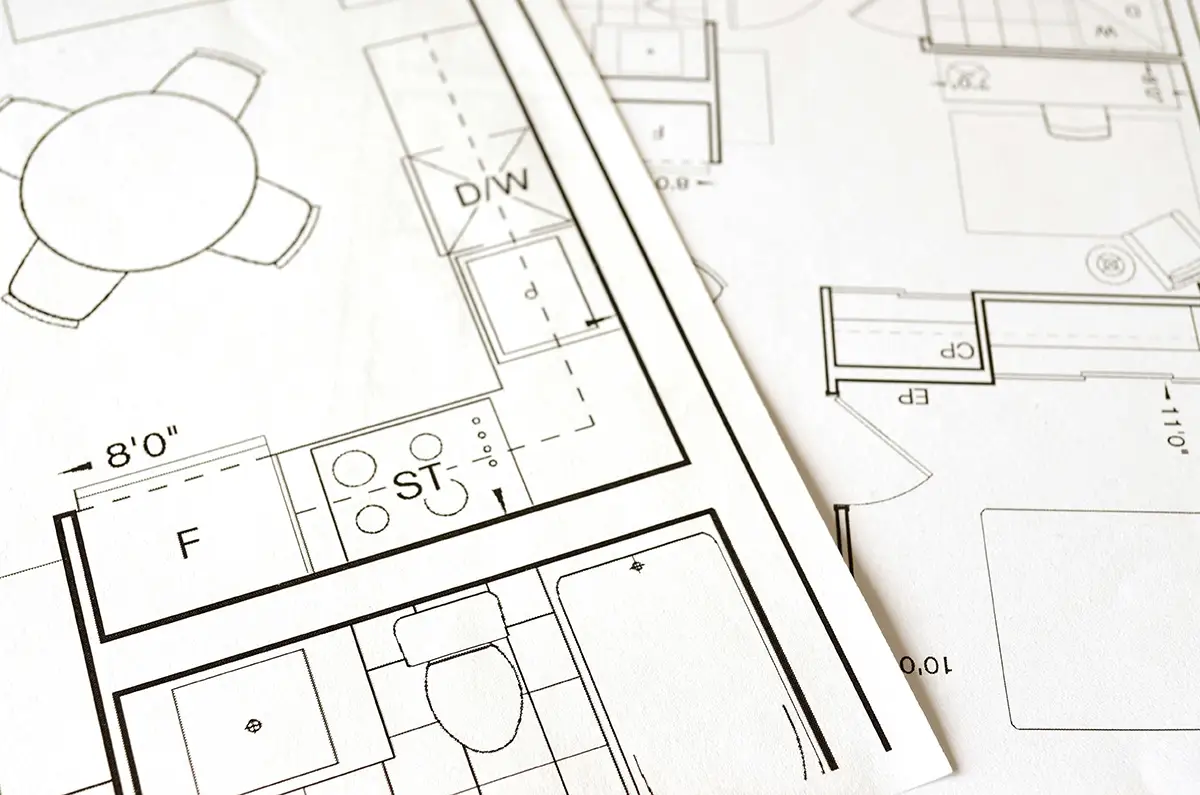
The design of internal electrical networks is usually carried out on an architectural plan prepared by the customer in DWG format. In turn, external electrical networks are designed on a topographic plan in DWG format.
Before starting the design, it is also necessary to receive the technical tasks of other sections of the project for electrical connections. For example, electrical connections to ventilation or air conditioning equipment, fire pumps, connections to heating units, radiators or other equipment may be required.
It is also important to receive the design task and wishes of the customer. The project can be developed in accordance with Latvian laws and standards, but often customers have specific requirements — for example, additional lighting in certain areas or more sockets for specific workplaces.
Industrial facilities require information on the available capacity, the capacities of the equipment and their preliminary placement. For office premises, an interior or design project is often already developed, which must also be handed over for design.
If the project is being developed for an existing object, photographs of the object are required. Most often, photos of switchboards are relevant in order to be able to assess the available capacity and free space in the distribution. During the design process, our engineers evaluate all available information and request additional data if necessary.
The duration of the design depends on the complexity of the object, its size, 2D or 3D and our workload.
Most often:
- For S-sized objects (up to 1000m2) it is 1month.
- M for medium objects (1000m2 to 5000m2) 2 months.
- L for large facilities (5000m2 to 10,000m2) 3 months.
- For XL object (from 10,000m2) around 6 months
First of all, the project of electrical networks is often necessary so that the object can be put into operation. Without a project, in many cases it is impossible to fulfill the requirements of construction and regulatory acts.
Secondly, the project helps to provide an economically sound and technically correct solution. If the wiring is built without a project, there is a risk that the electrician may use unsuitable solutions or materials that can make construction more expensive or cause problems during operation.
Thirdly, the project ensures the safety of users. During the design, loads are calculated, appropriate protective devices, cables and other elements are selected so that the wiring is safe and meets regulatory requirements.
In many cases, the solution is not simple and requires an engineer who is able to choose the most optimal technical solution. The designer sees the overall operation of the system - how different equipment and engineering networks interact with each other - and also takes into account the fire safety requirements of the facility, anticipating the necessary fire-safe solutions.
3D design allows much more accurate planning of the placement of engineering systems in the building. Unlike 2D drawings, in a 3D model it is possible to see how the electrical networks in the room are arranged together with other systems - ventilation, heating, water supply and structures.
This helps to timely notice and prevent collisions between various engineering systems still at the design stage. As a result, there are fewer unforeseen situations, redevelopments and additional costs during construction.
The 3D project is particularly useful in larger or more technically complex objects, such as manufacturing plants, public buildings or facilities with a large volume of engineering networks. This allows more accurate planning of cable tracks, equipment placement and provides better coordination between all design participants.
Contact our engineers
Send us information about your project and we will contact you to discuss possible solutions. Let's answer your questions and prepare a quote.